Everyone wants a high win rate trading system, but it will harm you.
Once upon a time I was watching a video on YouTube by a so-called influencer who was introducing a trading system for cryptocurrencies, and the first thing he said was, “This trading system has a very high win rate, over 90%!”
I turned off the video right away because he was too unprofessional. I bet he has never made money from trading. I also bet that now you must be eager to know what the 90%-win-rate trading system is, because you are always dreaming of finding a way with the highest win rate.
For most people, win rate is the only standard by which they judge a trading method. A 90% win rate means you win nine times out of ten.
Doesn’t that sound cool?
What if you win 90% of the time but only get $1 for each win and lose 10% of the time but $10 for each loss? Can this system still make money? Let’s find out what the expected value is:
Expected return = 90% × 1 – 10% × 10 = –0.1 < 0
This trading system, which has a negative expected value, is guaranteed to lose money. You may win nine times out of ten, but once that rare loss comes, you lose 10 times more than what you get. The single loss is so large that no matter how much you have won before, it is not enough to cover it. This system is doomed to lose money over the long run.
It may sound unbelievable, but mathematics does not lie.
The quality of a trading system is not judged only by win rate but also by the risk-reward ratio (RRR or R/R ratio), which means the ratio of average loss per trade to average profit per trade. If you earn $1 but lose $10 per trade, the R/R ratio is 10:1. Even a system that wins 90% of the time will lose money in the end because the ratio is so low.
It’s perfectly normal if you’ve never heard of the R/R ratio before. Our brains love certainty so much that we only think about the win rate. You feel excited when you win a lot of trades in a row because you think you’re going to get rich soon. However, you haven’t thought about the hidden risk that if you lose one time, all your hard work will be for nothing. After that, you pick yourself up and continue chasing the illusion of high win rates, and your account may start to grow again, but the next loss will wipe out your profits again before you can get them back.
It is easy to find and buy trading systems with a 90% win rate online, but I only want to ask one simple question:
if a trading system really worked, why would they sell it online?
Of course not! If it were me, I would keep it secret and never let others know, because that’s my gold mine.
Do you now see why trading systems with a high win rate never make you money? They only show you the win rate but not the very high R/R ratio, which means the risk is much higher than the reward. The peddlers know exactly what you care about. You can enjoy small profits and frequent wins every day, but you don’t realize that one day you’ll lose everything in one big loss.
What’s more, win rate and R/R ratio are usually positively correlated. It is actually easy to increase the win rate by simply increasing the R/R ratio. For example, if I design a system where I close the trade immediately after making $0.01 but refuse to stop out and just keep holding the position when the price goes against me, I will have a very high win rate. But when the market moves too far in the opposite direction, I may lose $10,000 instead of earning $0.01, and I need one million small wins in a row to make up for that loss.
So anyone who claims “a magical indicator with a 90% win rate” is a fraud. They might really be able to get to 90%, but they are purposely hiding the big flaw in the R/R ratio.
Most of the systems sold on the open market are based on grid trading or Martingale strategies, which means they have a high win rate and good-looking curve. Their principle is simple—trade against the trend. It keeps adding long positions as the price falls, and vice versa. What if the market keeps going down when you’re holding a long position? According to Martingale, You have to keep buying in order to lower the average cost. If the price goes up even a little one day, you can quickly break even or even make money.
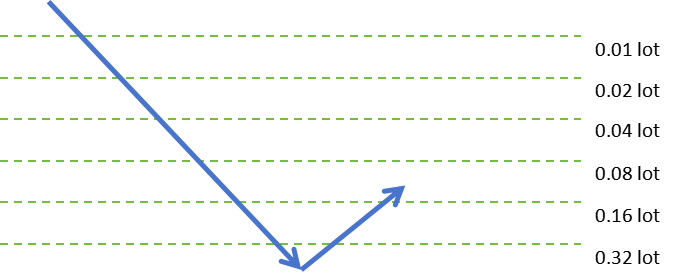
Sounds nice, right? But if you’re trading in a one-sided market, you won’t be able to see a rebound before your account blows up. At that point, you could lose all of your money in one night.
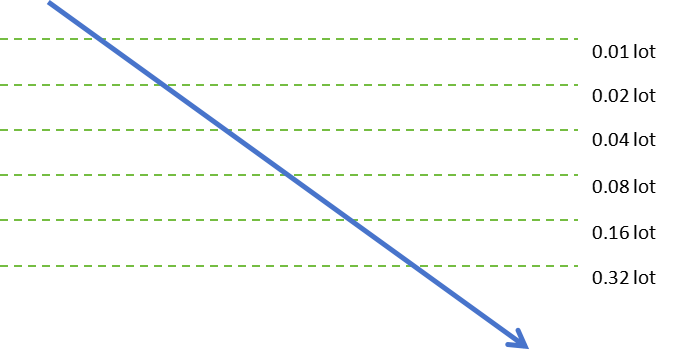
I started a quantitative trading business and hired a programmer a few years ago. We were working on a grid trading system for six months. I studied hundreds of trading systems, saw what was wrong with them, and came up with ways to make them better. Soon, I made the most advanced grid system on the market at the time, which had more than 3,000 lines of code and three modules of risk control.
Guess what? I blew up three times in just one month, losing a total of $30,000 across my accounts before I had to give up.
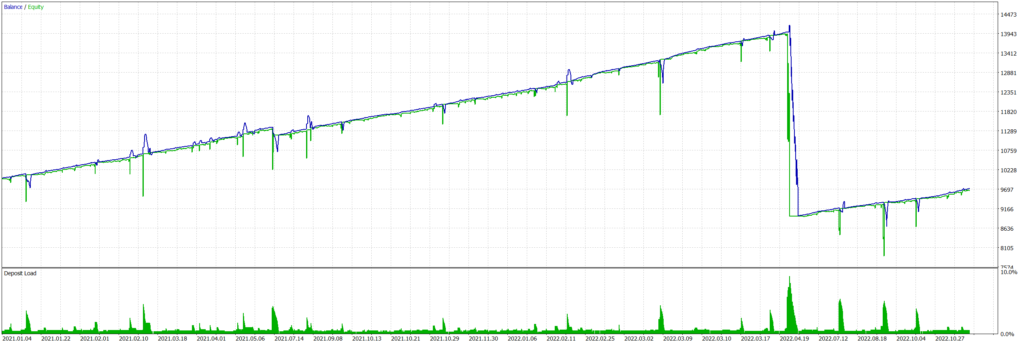
This system had a 74.01% win rate, but each profit was only $1.2, and every loss was $5,000. That means the R/R ratio was 5,000:1.2.
So what was the expected return of my system?
Expected return = 74.01% × 1.2 – 25.99% × 5,000 = -1,298.61 < 0
It doesn’t help at all even if I raise the win rate to 99%, because:
Expected return = 99% × 1.2 – 1% × 5,000 = -48.81 < 0
It’s doomed to lose money, even though its win rate is 99%.
I worked day and night for six months and lost a lot of hair to make this piece of junk. I thought the work was worth it when the system was working right because it could make me $300 a day. I even woke up laughing in my sleep. However, when that big loss happened, I lost not only all of my profits but also a large part of my capital.
I felt like a turkey before Thanksgiving. The turkey thought life would always be like this because it got the best food every day and lived well. It had eaten high-quality food every day since it was born, so it thought the good times would never end. It was still getting better food than ever the night before Thanksgiving. The turkey ate again, thinking that tomorrow would be another happy day, because that’s how it had always been.
The turkey did not understand why the butcher picked up the knife to kill it, because it had never experienced Thanksgiving before, but it had no chance to think about it anymore.
Unfortunately, most systems you can buy online are turkeys. They satisfy people’s need for certainty, which gives you short-term comfortable feelings. Would you buy a system that only wins 10% of the time but the one win would make up for all the losses? Not likely, because losing so many times is too painful. You’d rather buy a system that wins 90% of the time. You get that quick dopamine rush most of the time, even if it blows you up in the end.
You are like that turkey, enjoying each day without realizing what is coming, so you don’t think about how you might end up on the Thanksgiving dinner table. Trust me, that day will come.
To be honest, the systems that really make money are often uncomfortable to use. For instance, I have a system that only wins 30% of the time, but the R/R ratio is 1:3.
Expected return = 30% × 3 – 70% × 1 = 0.2 > 0
See? This system has a positive expected value. If you can handle the short-term drawdown and keep going, you will finally succeed. You lose most of the time, but the losses are small. You don’t win as often, but when you do, it’s a big win.
However, most people will not choose such a system, because in trading you mostly experience setbacks and losses. So most people would rather be like the turkey, telling themselves Thanksgiving does not exist.
This is the myth of high win rates.
Summaries:
- A trading system must be judged by win rate and R/R ratio.
- Win rate and R/R ratio are related. Just raise the R/R ratio by taking profit quickly and never stop out, and the win rate will be raised, but such strategies will always lead to a blow-up.
- Whether a trading system can make money in the long run depends on whether its expected value is positive, and it is determined both by the win rate and the R/R ratio.
The Previous Article: Why Do You Keep Losing Money?
The Next Article: The Myth of Technical Indicators: Do Technical Indicators Really Work?