Goodbye, Powell!
Amid domestic and global uncertainties, Kevin Warsh officially took over the Fed on May 22. He said at his inauguration ceremony that he would “lead a reform-focused Fed” and emphasized his commitment to taming inflation.
Today, with oil prices still hovering around $100, Warsh faces huge challenges. The whole market is watching how he will tame inflation. Taming inflation only requires monetary tightening, which will hit gold and stock markets hard. Right now, the semiconductor sector is in a bubble, and semiconductors are extremely sensitive to liquidity.
Will we see a market crash?
Will gold and other major assets drop?
This article will answer these questions from the following angles:
- Is a rising Treasury yield inevitable?
- What new changes will Warsh bring to the Fed?
- How will Warsh carry out QT after taking office?
- How to allocate major assets under this backdrop?
1. Is a rising Treasury yield inevitable?
U.S. Treasury yields have been rising and broke the 4.5% mark. Since the start of the year, the spread between long and short-term bonds has kept widening. Long-term bond yields rise faster, showing a “steepening” trend.
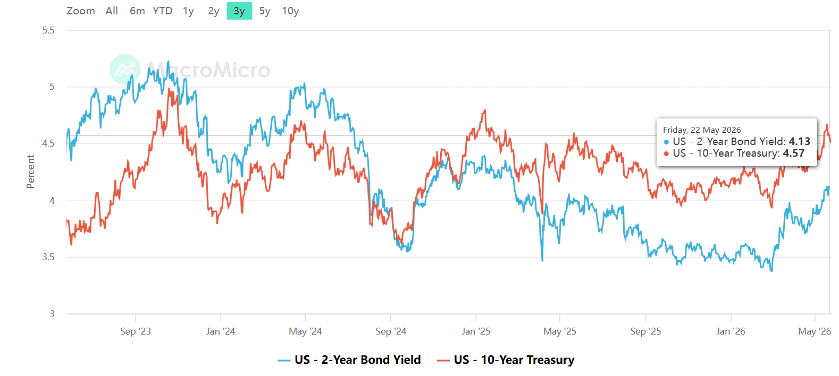
What does this mean?
It means capital is betting on inflation. The rise in long-term bond yields shows traders think inflation is no longer a short-term issue and will spread to rent, services, and other sectors. So long-term bonds need higher yield premiums to attract buyers. Also, the U.S. government spends way too much. In 2025, the federal deficit already hit $1.8T. Combined with ongoing tax reform and a series of spending plans, this gap is expected to widen by another $3T+ in the next 10 years. To fund spending, the government has to borrow, and to get buyers, yields have to go up.
This is the current situation. Inflation and the fiscal gap keep bond yields high.
What if Treasury yields hit 5%?
Treasuries are one of the safest assets in the world. If you can get a 5% annual interest just by holding them, would you still buy stocks? Maybe I would, but big capital won’t. They pursue safe, stable, and satisfactory returns. A 5% annual return from Treasuries is really satisfying enough for them.
When capital flows out of stocks and gold into Treasuries, both assets will inevitably drop. The U.S. government won’t be happy either. Even if they sell all the bonds, paying 5% annual interest is not easy.
So why hasn’t the market crashed yet?
Because there is a more attractive story in the stock market that makes 4.5% yielding Treasuries less appealing. That is the recent semiconductor rally.
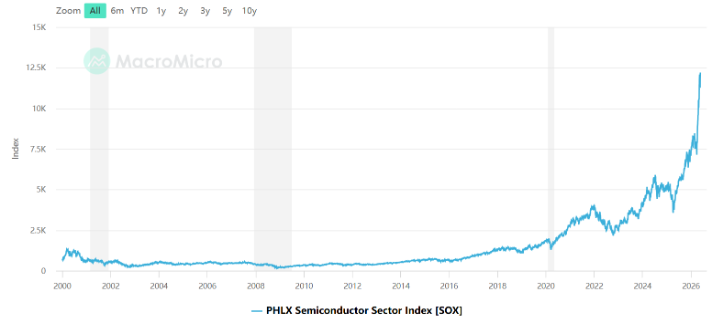
The market does not fear inflation and keeps hitting new highs because earnings growth is strong enough to digest high valuations. But semiconductors have risen way too much. Once the bubble bursts, the Fed will face the dual challenge of stabilizing the market and taming inflation.
Other factors are also pushing Treasury yields higher. Trump’s tariff war raised costs across all industries. The U.S. dollar’s share of global foreign exchange reserves has dropped from a peak of 72.7% to around 56%, which shows global demand for dollar assets is weakening.
Yes, rising Treasury yields are inevitable.
2. What new changes will Warsh bring to the Fed?
Back to Warsh.
One key measure in his reform is replacing the long-used core PCE with trimmed mean PCE as the new policy guide indicator. Trimmed mean PCE removes a fixed percentage of items with the highest and lowest price changes, which effectively reduces data volatility. The remaining data is then weighted and averaged to produce a smoother inflation reading.
With this calculation, inflation looks not that high. While March core PCE was up 3.2% year over year, the 12-month trimmed mean PCE is only 2.4%, and the trend keeps going down.
Doesn’t that make rate cuts possible?
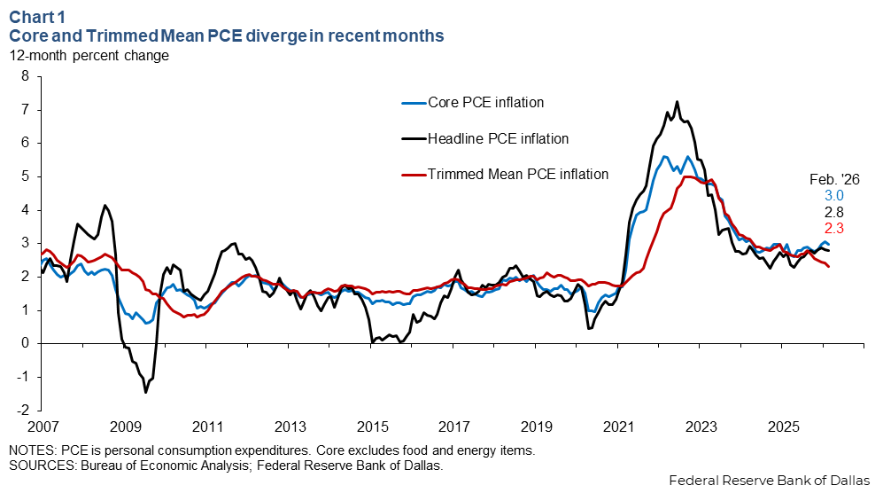
But the downside of using this data is that it is too slow.
Let’s go back to the 2020 pandemic. If the Fed had used the trimmed mean PCE as a reference, it would not have met the conditions for rate cuts. If the Fed had not cut rates then, the economy would have taken a huge hit. In 2021, the market complained Powell raised rates too slowly. Warsh wants the Fed to have “staying power” and not just passively respond to crises like before. But this staying power could lead to slow reactions, making the Fed unable to smooth the economic cycle. If inflation runs high and Warsh only focuses on trimmed mean PCE and calls for rate cuts, it will only worsen inflation. That goes against his original goal of “fighting inflation,” and the global economy can’t afford the consequences.
3. How will Warsh carry out QT after taking office?
Warsh is not stupid. I wrote an article before called “Warsh Hearing: Big Changes Coming to the Fed,” and we already defined his stance: he is actually a dove, but to create room for rate cuts, he has to tighten liquidity first. The method is QT.
But this path is really not easy to take.
As mentioned earlier, the U.S. government owes too much money now. As of May 18 this year, U.S. government debt has reached $39T, accounting for 120% of its total economic output. Interest payments alone hit $1.2T, accounting for 4% of GDP. If QT is carried out, the U.S. government will not have enough money to spend. But Trump can’t have it both ways. Balancing the federal government’s needs and economic reality is what Warsh has to figure out.
On March 26, Fed Governor Milan published “A User’s Guide to Reducing the Federal Reserve’s Balance Sheet,” which provides a technical roadmap for QT. Let’s see how the Fed will carry out QT.
In the modern monetary policy toolkit, implementation frameworks fall into three categories: scarce reserves, ample reserves, and abundant reserves. Under the scarce reserves framework, the reserve demand curve is steep. Small changes in reserves will cause large interest rate fluctuations, so the central bank has to intervene in the market frequently to keep policy rates within the target range. The abundant reserves framework is much easier. The demand curve is flat, and market rates will stabilize at the ideal level on their own. The ample reserves framework is a middle ground. The demand curve only slopes slightly downward, so interest rates are not very sensitive to small daily fluctuations in reserves.
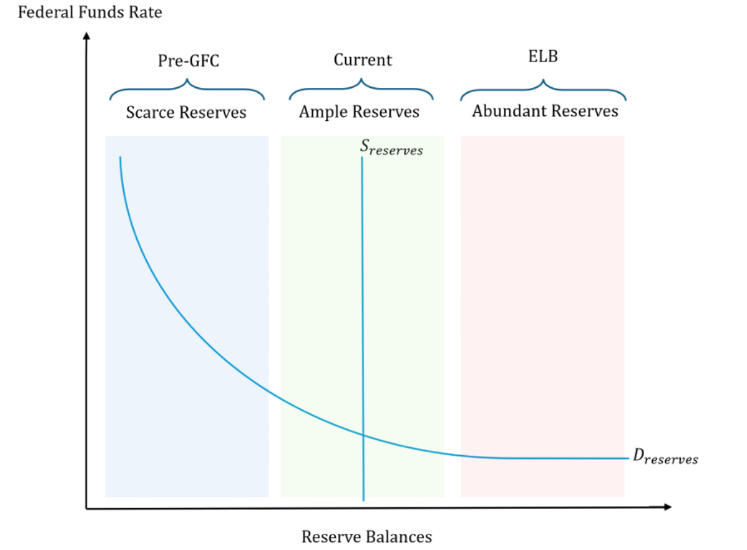
In this model, the demand curve is endogenous. To do QT, the supply curve has to shift left. But if it shifts too much and enters the “scarce reserves” range, interest rates will become highly sensitive to changes. That is why the Fed had to expand its balance sheet appropriately after QT reached a certain level before.
So what’s the solution? It’s simple.
On the supply side, the Fed can still do moderate QT, but not too much. It can’t fall into the “scarce reserves” range; it should stay as close to the threshold of the “ample reserves” range as possible. That way it won’t have a big impact on the market. In simple terms, rates can rise, but not too much.
But rates still go up, which does not fit Warsh’s rate cut goal. What to do?
On the other hand, even though the demand curve is endogenous, the Fed can relax regulatory requirements to reduce banks’ demand for reserves, which shifts the entire demand curve left as well.
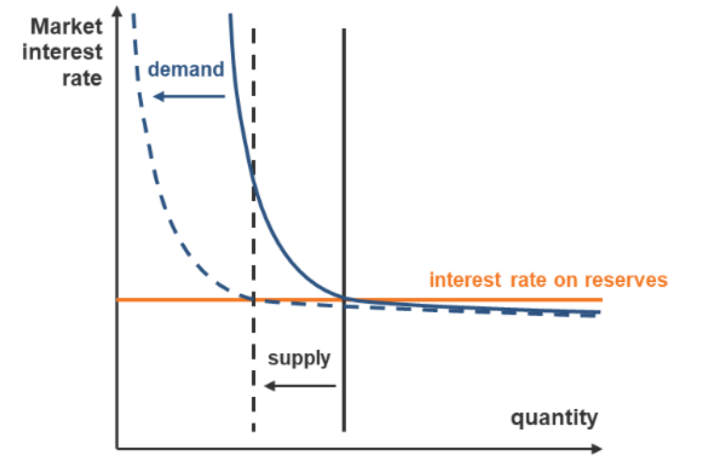
This way, the Fed can complete QT without raising rates. It solves the dilemma and makes everyone happy. According to Milan’s estimate, this approach allows up to $2T of QT room.
Of course, this is just a model; it works in theory. But actual implementation is a very complicated topic. Still, Warsh’s “QT + rate cuts” proposal now has a theoretical basis, which is a good start.
4. How to allocate major assets under this backdrop?
To sum up, with persistently high Treasury yields plus Warsh’s willingness to fight inflation and carry out QT, we will see obvious liquidity tightening.
Under high inflation expectations, the U.S. dollar will keep strengthening.
A stronger dollar is theoretically bearish for gold, but right now major central banks are both buying and selling gold; their actions are divided. Gold has been range-bound since January this year and is becoming less sensitive to factors like the Middle East situation and inflation. So gold will most likely stay in a range-bound trend.
Treasury yields should keep rising in the foreseeable future, but they have already passed 4.5%, which is above the warning line. The Fed may take action to cap yields.
For the stock market, better-than-expected earnings have offset risks from liquidity tightening. But the semiconductor rally has already been fully priced in. Once tightening policies take effect, they will definitely hit liquidity-sensitive tech stocks and semiconductors, leading to a large market correction. Investors chasing high market levels should be cautious.
Oil is more affected by geopolitics, so the key factor is not Fed policy but the situation in the Middle East. The “tension-easing-tension-easing” cycle is still playing out; no one knows when the conflict will end. So in the short term, oil prices will most likely stay between $80 and $100.