The S&P 500 and Nasdaq hit another new high, but the Mag 7 can barely push higher.
Memory chips are driving this current stock market rally. Starting last September, DRAM prices have tripled!
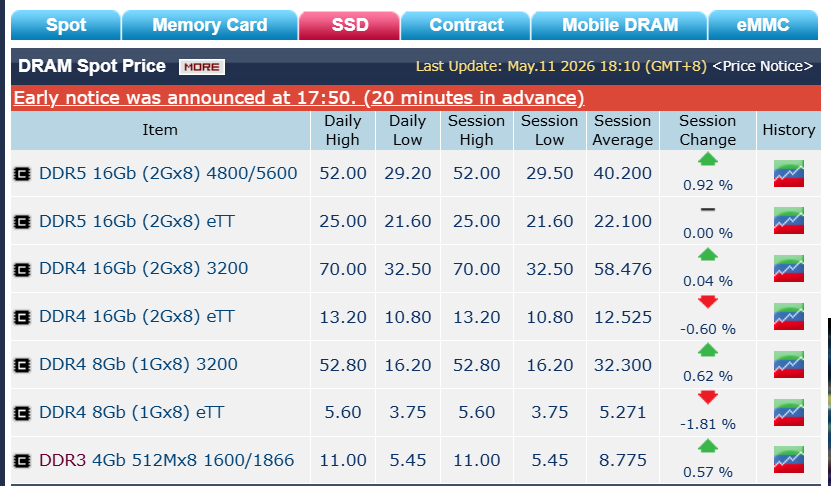
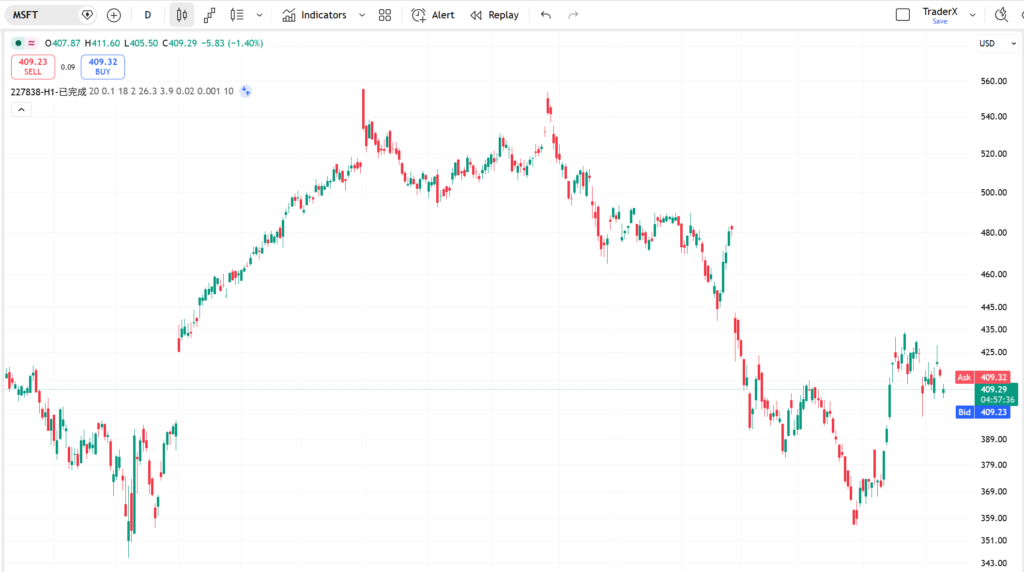
Microsoft and META, on the other hand, keep underperforming the broader market. Higher upstream costs are eating into these companies’ profits.
Anyone who got lucky enough to buy Micron or SanDisk, or at least went long the index and made good money, plus anyone who’s kicking themselves for missing the rally, is all asking the same question:
When will the memory chip price rally end?
1. A quick look at the memory industry
Memory chips are the second largest segment of the chip industry, alongside the well-known logic chips such as GPUs and CPUs.
Think of AI as a brain. We fixate on its computing power every day, but we ignore its memory. It’s like giving AI a complicated math problem to solve, but it forgets what the problem says halfway through thinking. That kills efficiency. On top of that, the Iran war caused a helium shortage, so memory chips are actually in real short supply now.
According to IDC estimates, the world will generate 213.56ZB of data in 2025, and that number will more than double to 527.47ZB by 2029. Current production capacity is nowhere near enough to meet demand.
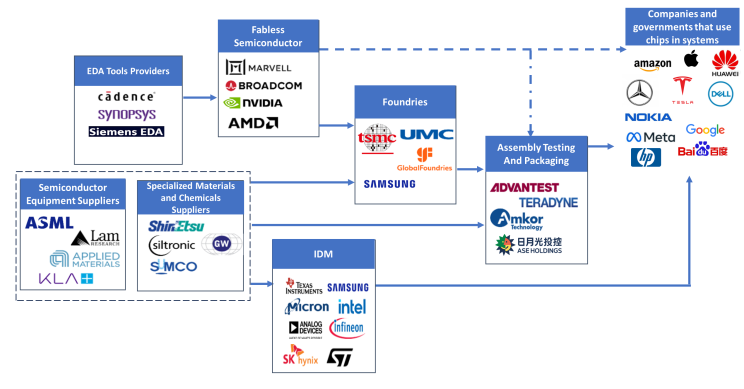
For the storage industry chain, the upstream segment covers core components such as wafer manufacturing and main control chips. The midstream segment covers storage products and packaging testing. The downstream segment covers all kinds of applications.
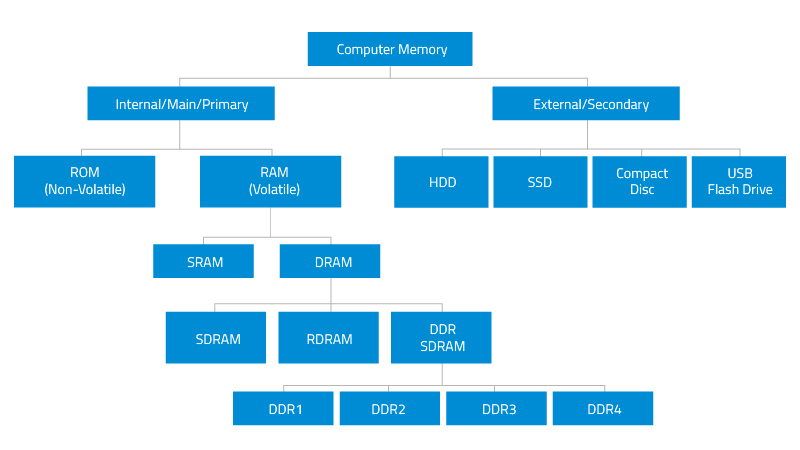
Broadly, memory chips are divided into volatile memory, such as DRAM, and non-volatile memory, such as NAND Flash. DRAM is what we call RAM. If AI were a person, DRAM would let it temporarily remember the problem requirements and numbers while solving a math problem. NAND Flash would let it remember your long-term user preferences.
Samsung, SK Hynix, and Micron Technology are the top DRAM makers, with market shares of 42%, 34%, and 22%, respectively. Micron ranks third, but it is expanding production very aggressively this year. Its capital expenditure this year is expected to hit $13.5B. But you can’t just throw money at this industry. Clean room resources are already tight, so production expansion is limited. Micron will not be able to increase capacity until its new plant goes online in 2027.
The main development direction for DRAM is HBM, or high-bandwidth memory. Think of it this way: when AI solves a math problem, it often has to glance back at the question to check the numbers, then slowly write the numbers down on the answer sheet. The AI is very smart, but its memory is slow. HBM lets AI figure out what to do after one quick look at the problem, so it doesn’t have to keep checking back and copying numbers. That gets rid of the memory bottleneck for computing power. Because the technical threshold is very high, only the three big DRAM makers can currently mass-produce HBM consistently.
Samsung, SK Hynix, Kioxia, Micron, and SanDisk are the top NAND flash makers. SanDisk’s capital expenditure in 2026 is expected to reach $4.5B.
2. Supply and demand imbalance: The root of this memory bull market
When an industry booms, it’s always driven by strong momentum.
What is strong momentum, exactly?
It’s essentially a supply and demand imbalance. You want something, you can’t find it, and you want it bad enough, so you pay more for it.
The surging semiconductor stocks right now are the ones selling you that overpriced product.
The stagnant Microsoft and Meta are the ones stuck paying those high prices.
This round of price increases actually started back in September 2025. Micron announced a 20% to 30% price hike back then. Samsung followed by announcing 15% to 30% higher prices for DRAM products and 5% to 10% higher prices for NAND flash products.
Why can’t makers like Micron just produce more?
Because this industry has very clear cycles. Once supply exceeds demand, prices drop sharply. So makers are pretty conservative about expanding production. Historically, memory industry cycles last around 3 to 4 years. That means two market lows are about 3 years apart, and two market highs are about 2 years apart.
If we use past cycles as a reference, this current cycle could last until 2027, then start to drop in 2028. For example, from 2012 to 2015, the mobile internet boom triggered a phone upgrade wave. That bull market lasted 4 years. When the upgrade wave ended and makers’ expanded capacity came online, we got a one-year bear market. The last cycle was the 2020 to 2023 pandemic rally. When pandemic restrictions shifted and consumer electronics demand dropped, the memory market fell into a slump again. This bull market started around 2024 to 2025, so 2027 will likely be the end of the cycle.
Reports say Micron’s entire 2026 HBM production and SK Hynix’s entire 2026 memory chips order book are already sold out. Global clean room construction takes 2 to 3 years to complete, and training core engineers takes around the same amount of time. The supply side cannot respond quickly to changes in demand.
3. Everything runs in cycles.
Micron executive Jeremy Werner said AI is moving from the training phase to the inference phase. The real bottleneck for AI is no longer just computing power but memory. AI inference relies on a KV cache and context data. If there is not enough memory, it will lead to repeated calculations and a sharp drop in efficiency.
Like we said earlier, even if you’re a math genius, your efficiency drops a lot if you have to keep looking back at the problem because you can’t remember the numbers.
That’s exactly what’s happening right now.
That’s why high-bandwidth, large-capacity memory will be the key to leaps in AI performance and will reshape the entire memory industry landscape.
That said, do any investors remember the hype around China’s dual carbon goals back in 2020 and 2021? Carbon neutrality and carbon peaking were all anyone talked about. Solar and wind stocks surged. The market was full of grand narratives. Some people even claimed, “We will cut down all the trees on hills to put up solar panels in the future, because we will never have enough electricity.” Looking back now, that sounds completely ridiculous.
People never realize they’re in the middle of a cycle while it’s happening.
Price data from the China Flash Market website shows that the price gains for NAND and DRAM have actually slowed down since March this year. The price increase rate for memory modules has already dropped. As production capacity gradually expands, memory module prices will likely stay roughly the same from the second half of 2026 to 2027.
That means the memory price rally is already in its final stage, or at least in a plateau phase. Storage prices will stay high for a while, but that’s a completely different dynamic from rising prices.
When the clean rooms are completed in 2027 and more capacity comes online, that’s the time for investors to get out. Don’t forget Micron once dropped from $95 to $1.50.
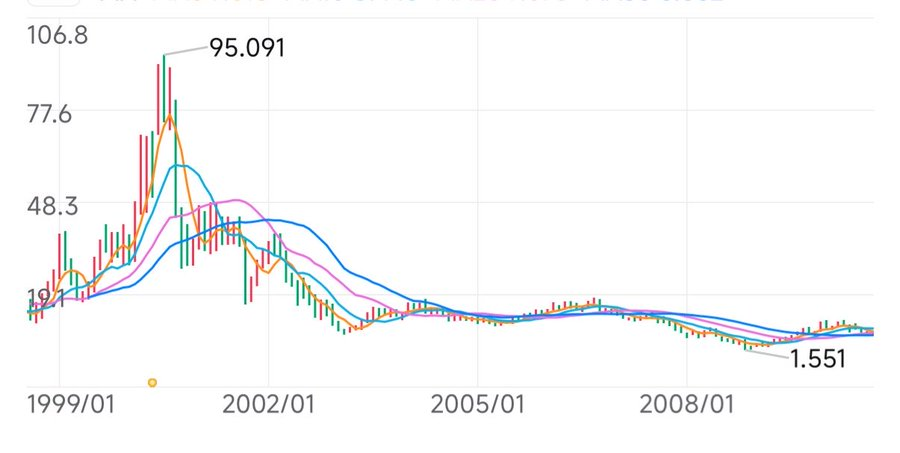
And don’t forget, the solar stocks that the market went crazy for back then are still trading way below their old highs.