Markets finally got some good news. Stocks, gold, and silver are rallying because both the U.S. and Iran are showing signs of easing tensions.
Trump said he may withdraw troops within “two to three weeks,” claiming that “the objective has been achieved.” Meanwhile, Iranian President Pezeshkian stated that they have a “genuine willingness to end the war” but require guarantees to prevent future aggression.
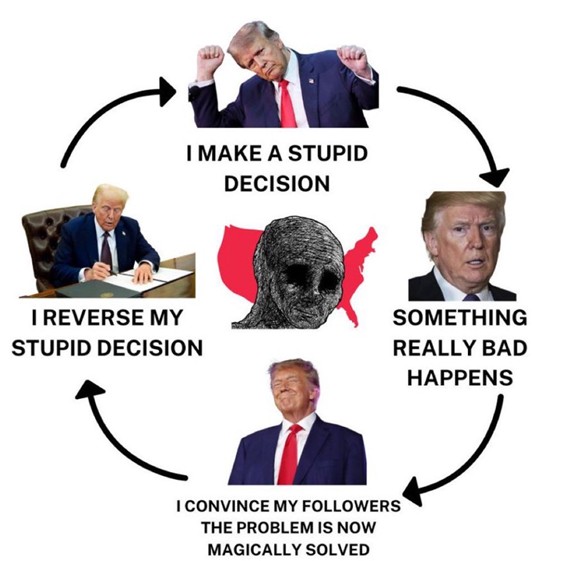
Traders are joking that this is another “TACO trade.” Trump has once again created a perfect dip-buying opportunity. The problem is, many investors are already blown up and no longer have the capital to buy the dip.
We will talk about:
- The global economic backdrop before the conflict
- Will inflation come back after the conflict?
- What lies ahead for both the war and the markets?
1. The global economic backdrop before the conflict
Before the conflict, the U.S. economy still looked weak on the surface but was actually in a recovery phase.
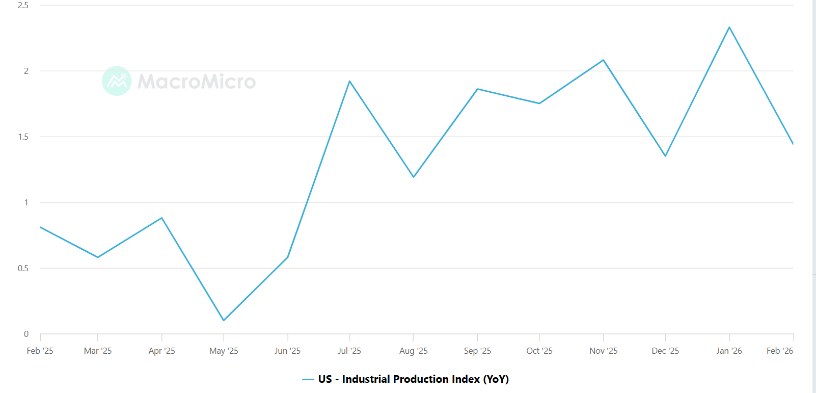
This recovery is mainly driven by AI, supporting steady industrial growth. In February, U.S. industrial production rose 0.2% month over month. Although lower than January’s 0.7%, it marked the fourth consecutive month of growth. Meanwhile, the ISM PMI came in above expectations, showing continued confidence among businesses.
However, consumption and employment remain weak.
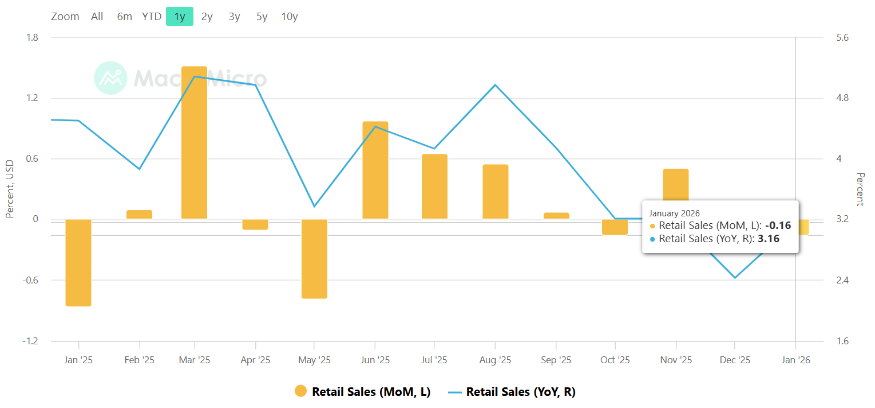
Retail sales fell 0.2% month over month in January but were slightly better than the expected -0.3%. Weakness mainly came from dining and auto sales due to cold weather. Even without the conflict, consumption faces pressure because of tariffs, inflation, and weak employment. However, tax rebates from the “Big Beautiful Bill” are expected to accelerate next quarter.
Overall, consumption may not become a major drag on the economy.
On the employment side, jobs in healthcare, IT, and professional services are under pressure due to AI. February nonfarm payrolls unexpectedly dropped by 92,000, versus expectations for a 55,000 increase. The unemployment rate rose to 4.4%, above the expected 4.3%.
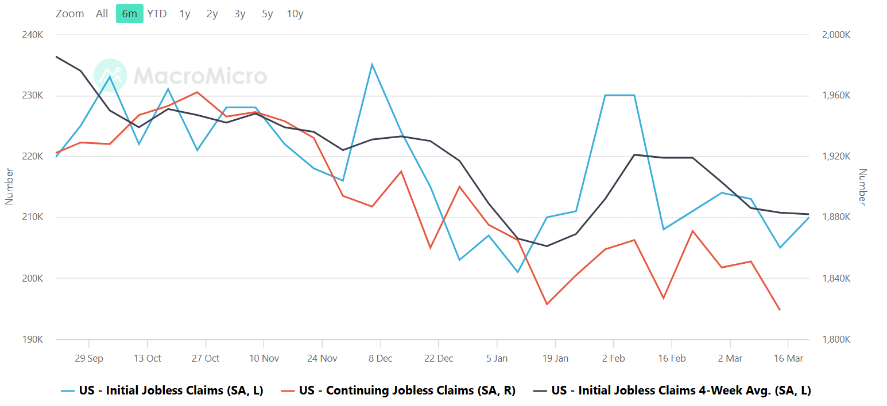
However, initial jobless claims have not surged, suggesting February may already be a low point. March data is unlikely to deteriorate further.
It is important to note that all of the above data was released before the conflict. After the US–Iran tensions escalated, the market’s focus shifted entirely to inflation.
2. Will inflation come back after the conflict?
Rising oil prices make inflation hard to avoid.
In February, U.S. PPI rose 0.7% month over month, above the previous 0.5% and the expected 0.3%. Year over year, PPI reached 3.4%, well above the 2.9% forecast. Importantly, this data was released before the conflict, indicating that inflation was already picking up.
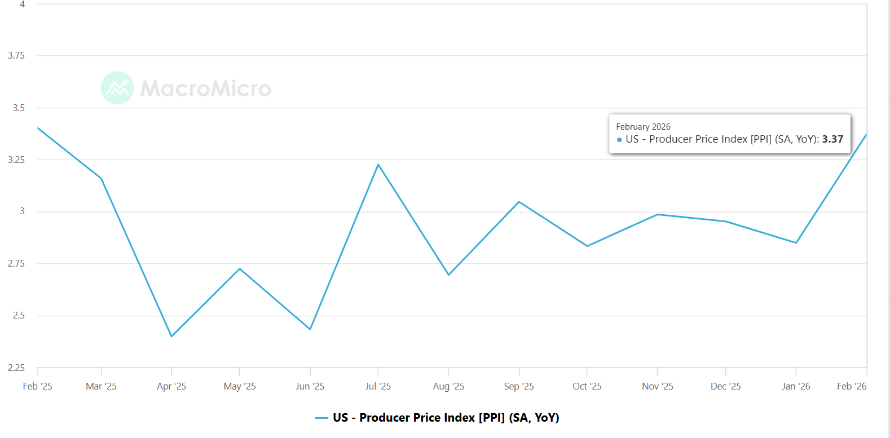
Historically, every $10 increase in oil prices adds about 0.2 percentage points to U.S. inflation. With oil already rising before the conflict, both PPI and CPI are likely to move higher going forward.
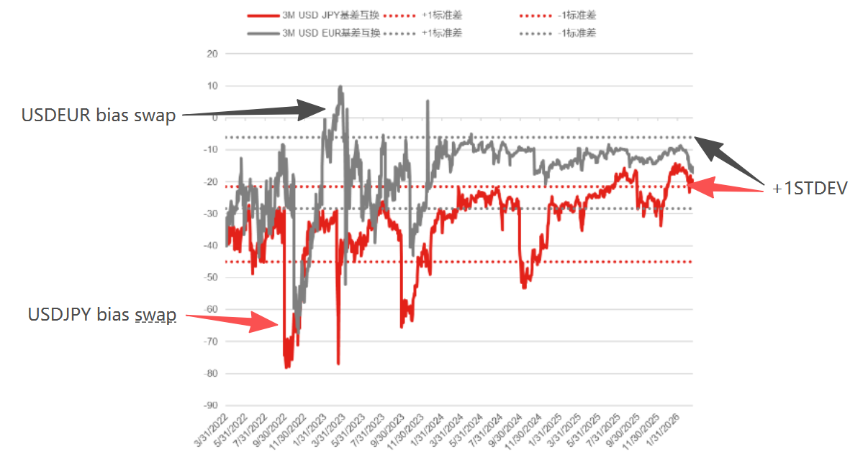
In the short term, inflation has largely been priced in. Even when CPI is released, it may not surprise the market. Basis swaps in pairs like USDJPY and EURUSD have already moved beyond one standard deviation, showing strong positioning for a stronger dollar.
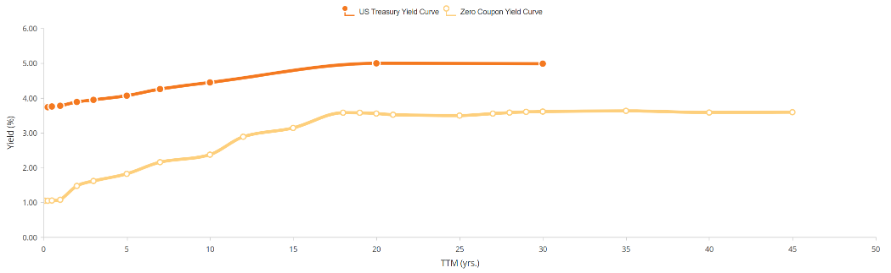
In the long term, the yield curve is flattening. Short-term rates are rising as markets price in more rate hikes, while long-term rates remain capped due to recession expectations. A flattening curve is a classic signal that markets are preparing for a slowdown.
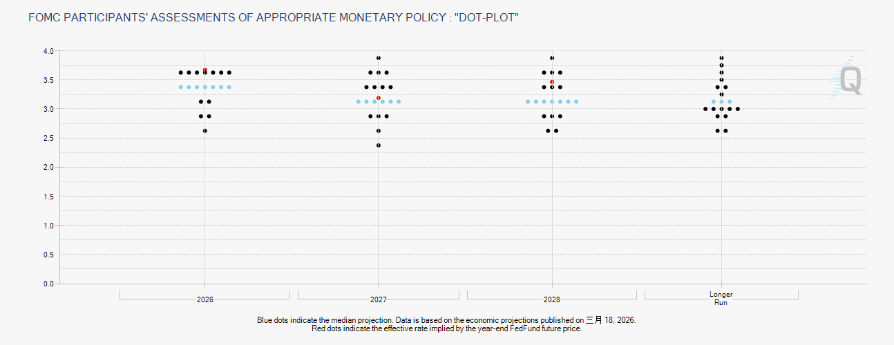
As a result, many are betting on further rate hikes. However, this may be too pessimistic. The Fed’s dot plot has turned slightly more hawkish but still signals one rate cut this year. With rates already high (3.5%-3.75%), there is limited room to hike further. Rate hikes could put even more pressure on the economy and labor market.
With inflation and recession risks largely priced in, asset performance looks as follows:
- Stocks: Most vulnerable to stagflation. The S&P 500 has declined for four consecutive weeks, with rate-sensitive tech stocks under pressure.
- U.S. Treasuries: Yield curve flattening suggests a possible recession in the next 12–18 months.
- Gold: Despite its safe-haven status, gold is underperforming due to a strong dollar.
- FX: With the return of a strong dollar, major pairs are trending. USDJPY and USDCAD are rising, while EURUSD and GBPUSD are falling.
3. What lies ahead for both the war and the markets?
Trump is always unpredictable.
What he may have underestimated is that Iran’s real weapon is oil. Due to the conflict, major Gulf producers, including Iraq, Qatar, Kuwait, and Saudi Arabia, have cut output by at least 10 million barrels per day. Oil prices remain above $100 per barrel.
While the U.S. military is strong, rising inflation, falling stocks, and voter dissatisfaction are putting pressure on Trump. His recent post delaying strikes until April 6 suggests he may be looking for a way to de-escalate.
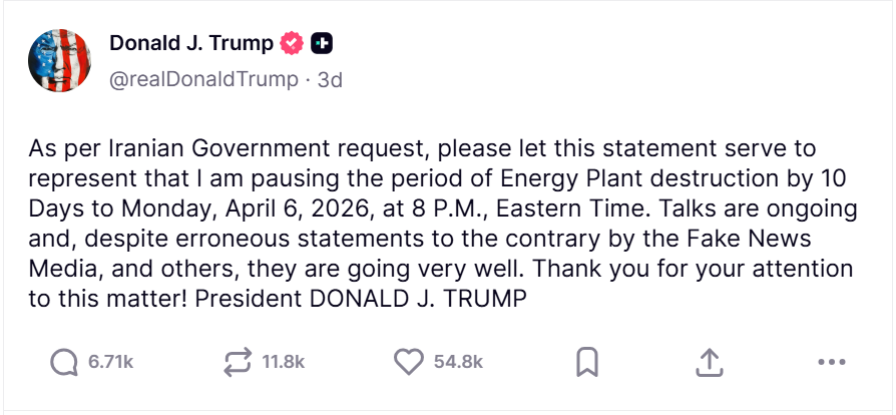
Based on this, three scenarios emerge:
- If the conflict ends within one month, oil prices may fall quickly. Strategic releases from the IEA and increased OPEC supply could offset the shock.
- If it lasts 2–3 months without escalating into a full regional war, supply disruptions could keep oil above $100 for an extended period.
- If it continues for more than six months, a prolonged energy crisis could trigger stagflation and recession.
The future remains uncertain. No one knows Trump’s next move. But the market is losing patience. With midterm elections approaching, political pressure will play a key role.